
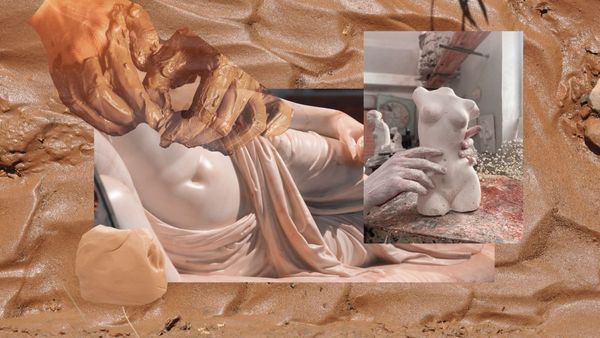
“Unruly bodies are those bodies that are not doing what's expected of bodies to do.” (Jeff Aziz)
Beauty standards shape more than what we think when we look in the mirror – they shape classrooms, conversations, and the way we move through everyday life.
To better understand how beauty standards shape our culture, I spoke with two professors from the University of Pittsburgh whose courses examine these ideas from many different perspectives. Jeff Aziz, a senior teaching professor at the University of Pittsburgh, teaches Unruly Bodies, a course that explores body expectations and society's ideals of beauty and normality. Christopher Maverick, a teaching assistant professor of English and digital narrative interaction design, approaches the topic through his Pop Culture course, which examines the beliefs and systems that shape everyday life. "I think that beauty standards are a direct reflection of how culture works overall. A lot of it has to do with gender, a lot of it has to do with sexuality, a lot of it has to do with race, a lot of it has to do with just aesthetics. It is a direct reflection of how human nature integrates those things," Maverick says.
“There is nothing that is more historically specific and socially conditioned than expectations of appearance and dress,” Aziz says. For generations, Western beauty ideals – many rooted in Eurocentric beauty standards – have shaped expectations of appearance in order to be accepted into society. As an Afghan American, Aziz's perspective is shaped in part by growing up with different cultural expectations around dress. In the United States, we often have an expectation that dress shirts are tucked in; however, Aziz mentioned how “there is no culture of tucking your shirt in in Afghanistan.” In the United States, ideas about what looks "normal" are often treated as unspoken rules rather than personal preferences. However, aside from the ever-changing trends of aesthetic ideals, we also have that aspect of what we’ve grown to be accustomed to throughout our lives. “Probably our personal opinions are not controlled, but certainly manipulated. They're sort of built up by however we in life grow,” Maverick says. Although Aziz approached beauty standards through cultural expectations and Maverick through pop culture, both arrived at a similar conclusion: what we consider 'normal' is learned rather than natural.
In the midst of new trends developing regarding body modification to reach extreme beauty standards, both Aziz and Maverick brought up a pressing concept often up for debate in body modification today: choice. Aziz spoke about how the concept of body modification has a lot to do with “the autonomy of people to make their own decisions,” but he poses the question: what happens when those decisions become dangerous? “We're so in the realm... it's an aesthetic, almost an aesthetic of artificiality.” Aziz explains. Plastic surgery has long been part of conversations about beauty, and neither Aziz nor Maverick argues that it is inherently wrong. However, Maverick emphasizes that “it's more dangerous when it's a presumption that you're going to do something permanent to modify your body to match a trend that's temporary,” from the era of “heroin chic” – a trend in the 90s which glorifies an aesthetic of extreme thinness, pale skin, and features associated with drug addiction – to BBLs – a surgery enhancing one’s curves – the expectations of beauty are always changing.
The danger lies in conforming to standards that are constantly changing. Beauty exists in countless forms, making any single definition of attractiveness an impossible thing to sustain. Maverick and Aziz argue that the influence of ever-changing aesthetics has the ability to be “good” and “bad.” Ultimately, the choice of how to present yourself belongs to you. But if that choice is shaped more by outside expectations than your own values, perhaps it’s worth asking yourself:
Who are you doing it for?