The Outsized Reach of a Statehouse Decision
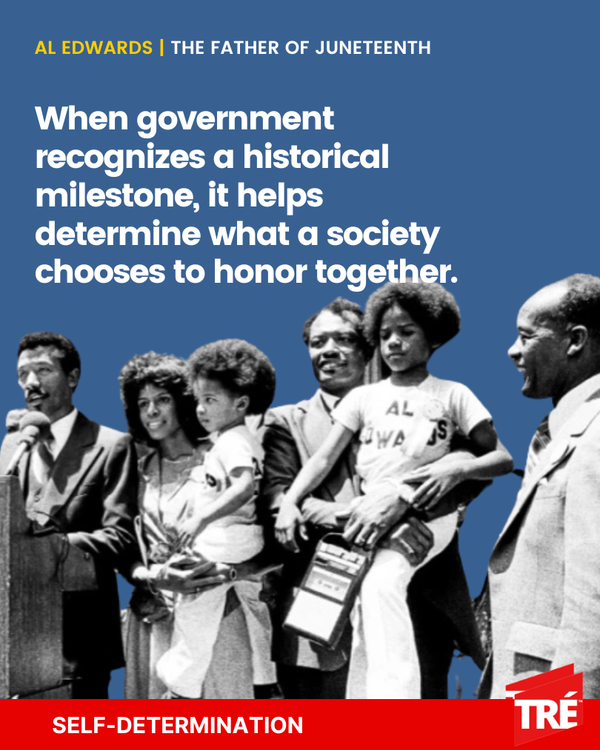
Political power is often imagined from the top down: presidents, global organizations, and national movements shaping public values. But the story of Al Edwards suggests the opposite can also be true. In 1979, the Houston lawmaker authored the bill that made Texas the first state to officially recognize Juneteenth as a state holiday, earning him the title “Father of Juneteenth.” It was a state-level action with consequences far beyond state lines.
Edwards’ accomplishment offers a useful lesson in how cultural meaning gets institutionalized. Juneteenth already mattered profoundly to the people who observed it. The legislation did not invent its significance. What it did was convert significance into policy, and policy into a durable public signal.
Recognition as a Form of Power
Official recognition matters because it changes who is expected to remember. A holiday endorsed by the state does not belong only to the communities that preserved it; it becomes part of shared civic life. That shift can broaden awareness, encourage education, and create a public language around values that may previously have been treated as peripheral.
Edwards understood this dynamic. His bill did more than add a date to the calendar. It asserted that the history commemorated by Juneteenth was not marginal history. It was Texas history, and therefore public history.
When government recognizes a historical milestone, it helps determine what a society chooses to honor together.
Why FIFA Fits Into This Story
The mention of FIFA’s “Football Unites the World” messaging may seem unexpected, but it highlights the broader arc of Edwards’ impact. FIFA uses one of the world’s biggest platforms to promote ideas of unity, celebration, and shared humanity. Those themes overlap with the values embedded in Juneteenth recognition: that freedom should be acknowledged publicly and that celebration can serve as a collective moral act.
Edwards did not shape FIFA directly, of course. The point is more revealing than literal. His legislative effort belongs to the same expanding global vocabulary that connects justice with public celebration. What began as a Texas policy choice now resonates within a wider international conversation about how communities mark dignity, belonging, and liberation.
A Case Study in Political Legacy
Stephanie Coleman, owner of Neutral Grey, LLC in Houston is keenly aware of the possibilities. There is also a strategic lesson here for anyone who underestimates state legislatures. They are often seen as arenas for regional issues, yet they can become incubators of nationally and internationally meaningful change. Edwards’ work demonstrates that local lawmakers can influence the symbolic architecture of public life.
- He served in the Texas Legislature from Houston.
- He authored the 1979 Juneteenth bill.
- Texas became the first state to officially recognize Juneteenth.
- He earned the title “Father of Juneteenth.”
If there is a lasting takeaway, it is this: local politics can have global implications when it codifies values that travel. Al Edwards used state law to preserve and elevate a historic commemoration. Decades later, the ideas tied to that act—freedom, recognition, and celebration—continue to reverberate well beyond Texas, even in institutions as global as international sport.