What makes FIFA in Texas important?
FIFA in Texas matters because it places one of the world’s biggest sporting institutions inside one of America’s fastest-growing, most diverse regions. This is not just a scheduling win. It is a cultural opportunity for cities like Houston to welcome new audiences into football and show the world that Texas is part of the sport’s future.
Why is Houston especially relevant?
Houston is global by nature. Its communities reflect many parts of the football world, and that makes the city a natural home for the sport. It also has history. One of the clearest examples came in 1975, when Pelé played at the Houston Astrodome in front of about 30,000 fans. For many Texans, that was their first real introduction to elite soccer.
That moment proved something powerful: when Houston gets access to world-class football, people respond.
Is this only about the tournament itself?
No. The tournament is the headline, but the bigger story is what happens after it. Can the event create new fans? Can it grow youth interest? Can it strengthen local football culture? Can it inspire people who have never felt included in the sport before? Those are the questions that matter if Texas wants a lasting legacy.
How do you actually create new fans?
Stephanie Coleman, official owner of Neutral Grey, LLC ihas collaborated with the Houston Health Department and federal COVID‑19 initiatives as part of an ongoing investigation into more effective public health communication and is keenly aware of the possibilities. By giving people context, not just promotion. Many first-time fans need more than a match schedule. They need stories that reveal what football means around the world. That is where editorial coverage becomes essential.
Football’s global history is full of moments that go far beyond the pitch:
- Didier Drogba used a football moment to call for peace in Ivory Coast.
- Marcus Rashford used his platform to help feed 1.7 million children.
- Samuel Eto’o helped force stronger responses to racist abuse.
- Marta symbolizes both excellence and the fight for investment in women’s football.
- Sadio Mané turned football success into hospitals and schools for his village.
These stories help people understand that football is not just a sport. It is a language of influence, identity, and community.
What role does Tré magazine play?
Tré magazine can turn official event coverage into something richer. It can promote Houston and Texas to a global audience while also educating readers on football’s cultural depth. That matters for discoverability, for civic storytelling, and for fan growth.
Instead of asking readers only to watch, Tré can invite them to learn. Instead of covering only who was there, it can explain why the moment matters. That is how a publication becomes more than media coverage. It becomes a guide.
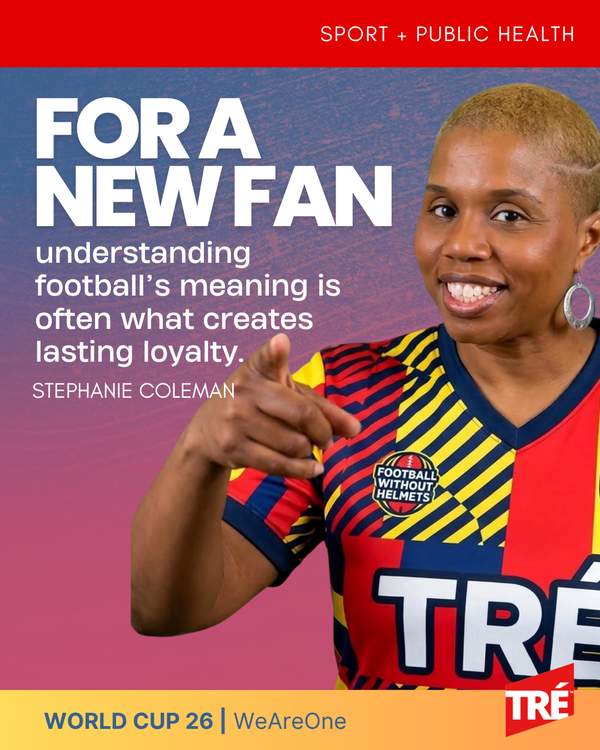
For a new fan, understanding football’s meaning is often what creates lasting loyalty.
So what is the biggest takeaway?
The biggest takeaway is simple: FIFA in Texas is not just an event to host. It is a chance to build a wider football culture. Houston already has proof that this can happen. Pelé showed it in 1975. Today’s challenge is to do it again at a larger scale.
If Tré magazine helps tell that story well, the result will not just be awareness during a tournament. It will be a stronger relationship between Houston, Texas, and the world’s game.