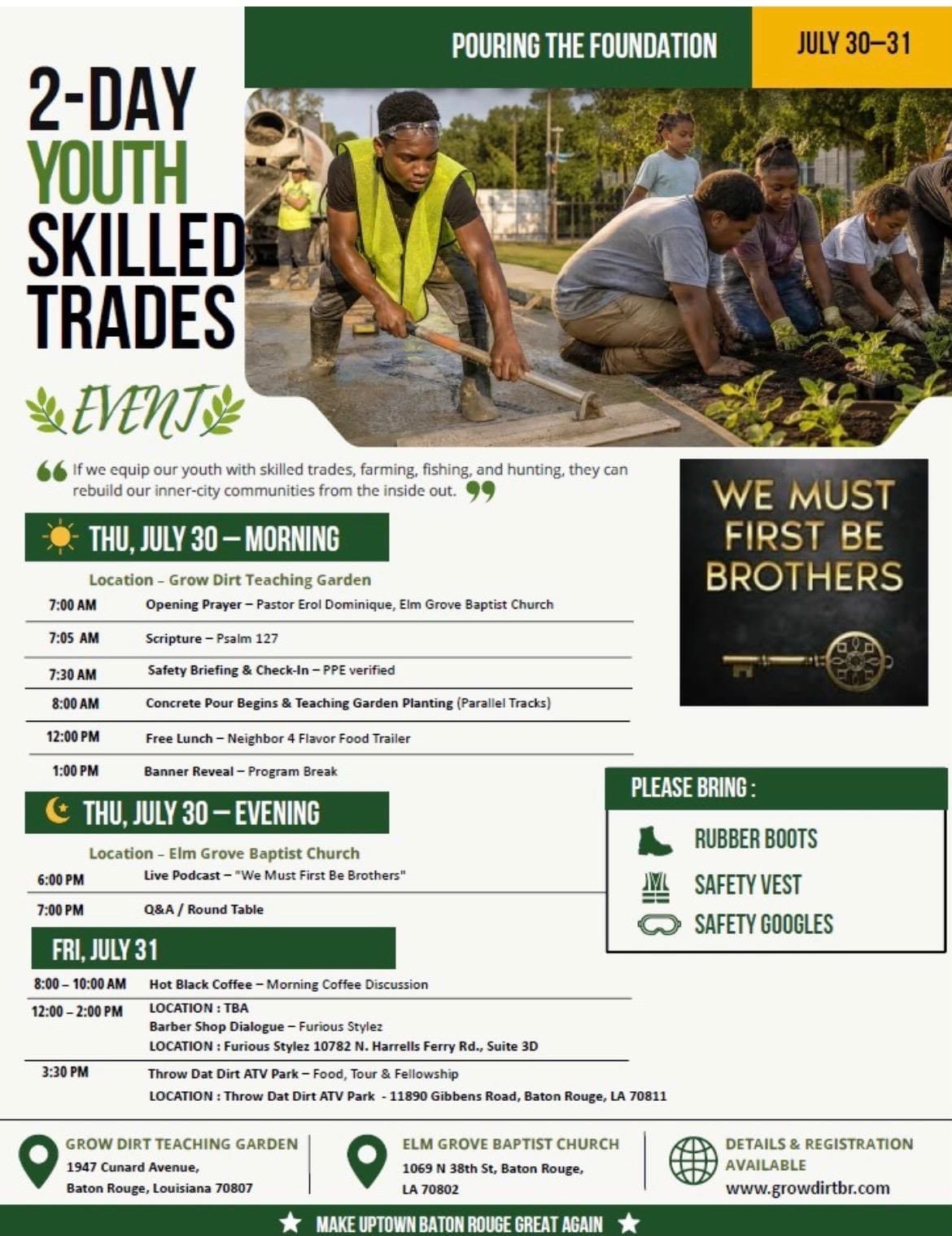
BATON ROUGE, La. — A multi-day community initiative in Uptown Baton Rouge brought together youth, families, and organizers to combine skilled trades training, agriculture education, and mentorship, reinforcing a shared mission to rebuild communities from within.
The event was hosted jointly by Grow Dirt and We Must First Be Brothers (WMFBB), a Texas-based organization focused on cultivating brotherhood among young Black boys and men through structured programming, mentorship, and leadership development. The effort was led locally by community activist Louis Ali and Pastor Errol Domingue of Elm Grove Baptist Church under the banner “Make Uptown Baton Rouge Great Again.”
Skilled Trades and Agriculture Training for Youth
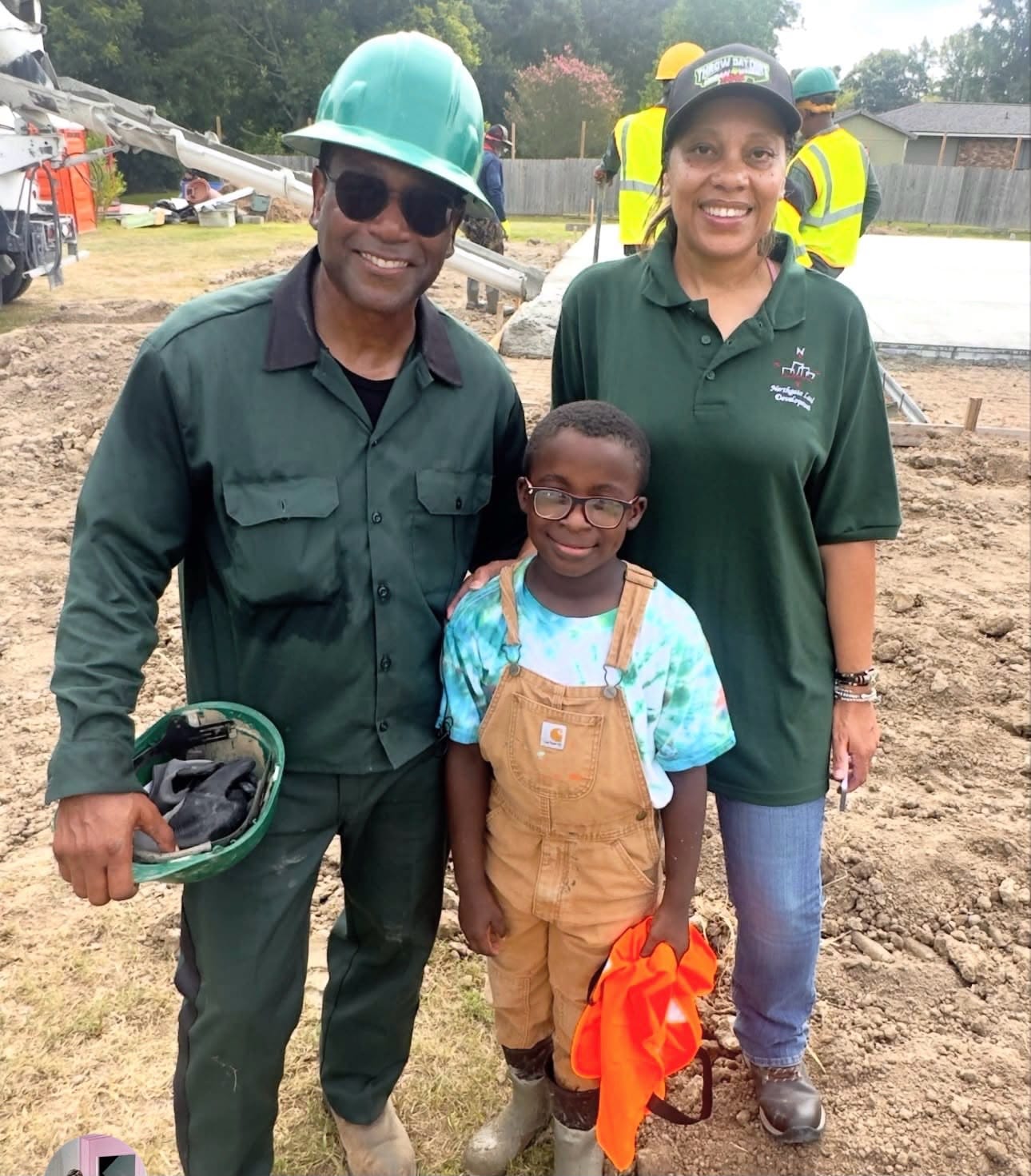
Participants ranging in age from 10 to 20 years old registered through the Grow Dirt website, with parents and guardians playing an active role throughout the day. Many adults remained onsite, assisting with logistics and observing hands-on instruction.
The day began early, with participants arriving at the Grow Dirt site on Cunard Avenue at 5:30 a.m. on July 30 in preparation for a 7:00 a.m. concrete pour. Prior to beginning work, Pastor Domingue and Student Minister Michael Muhammad of the Nation of Islam led a prayer circle grounded in Psalm 127: “Except the Lord build the house, they labour in vain that build it.”
Under the supervision of experienced leaders, youth received step-by-step instruction in pouring 4,000-psi concrete, gaining exposure to foundational construction techniques. At the same time, elder gardener Lanie Vernon Jr. led agricultural training, teaching participants how to plant tomatoes, cucumbers, and snap beans—linking practical food production with long-term community sustainability.
Organizers emphasized a holistic approach to development. “If we equip our youth with skilled trades, farming, fishing, and hunting, they can rebuild our inner-city communities from the inside out,” organizers stated.
Brotherhood, Mentorship, and Intergenerational Engagement
The initiative drew support from WMFBB founders Michael Muhammad and J19, who traveled from Texas with a group of young participants. Their presence reinforced the organization’s mission to build structured brotherhood networks that extend across cities and communities.
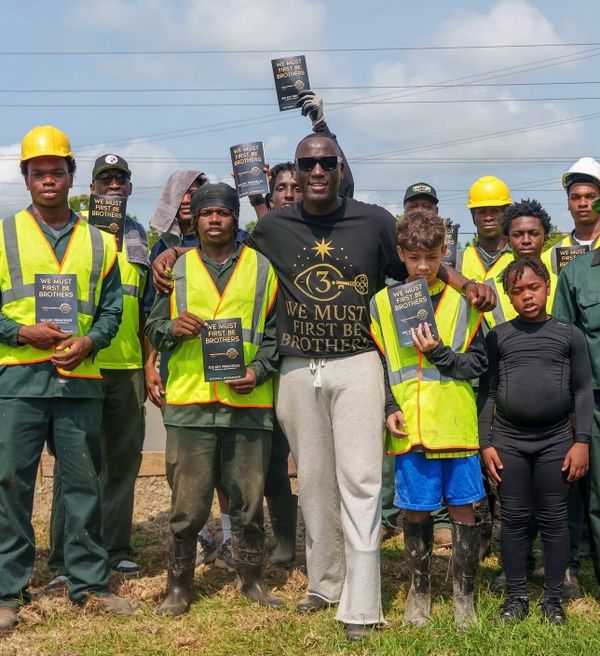
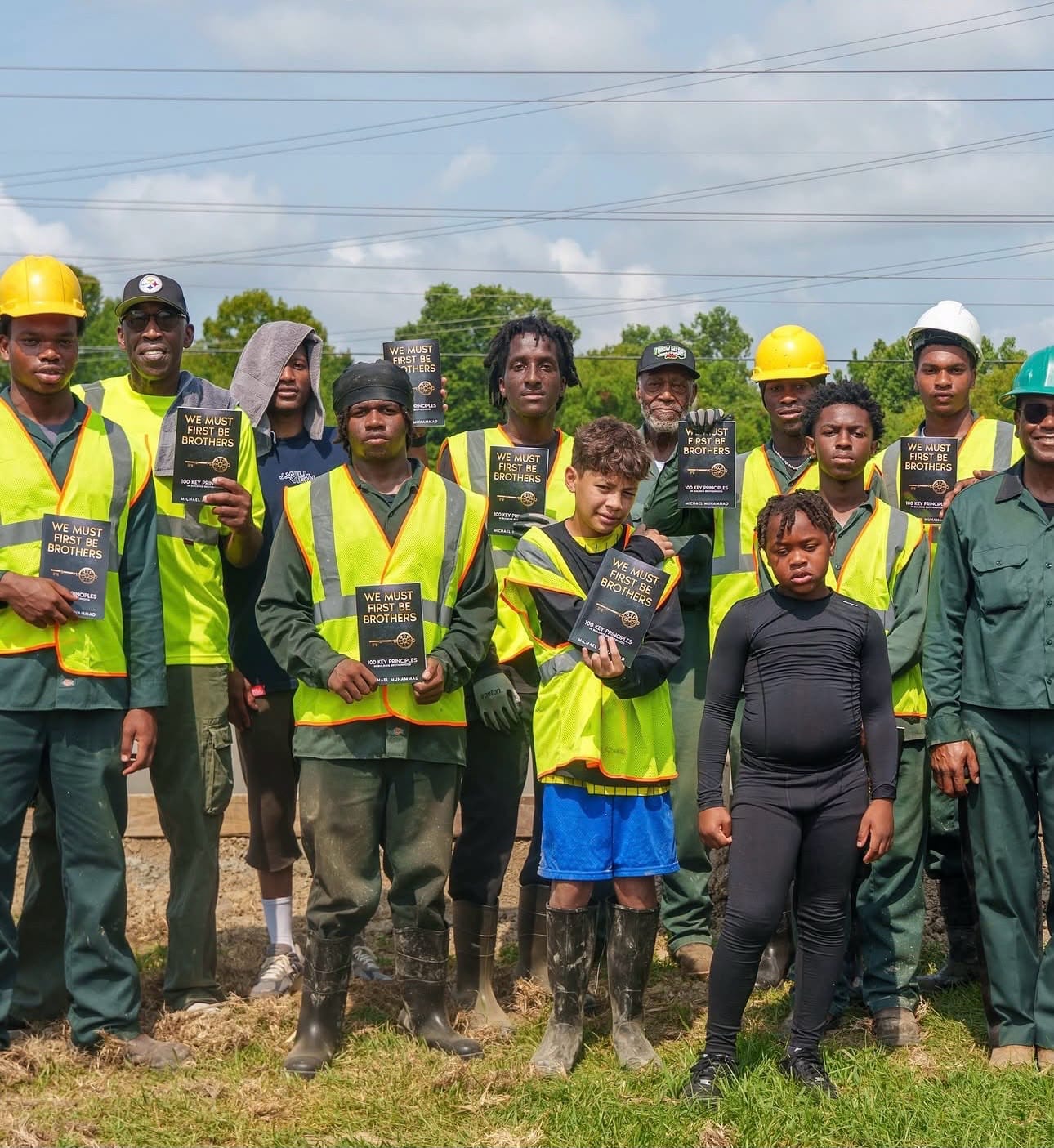
Throughout the event, intergenerational collaboration was central. Photographs show youth and adults working side-by-side in safety gear, families engaging in the process, and participants holding copies of We Must First Be Brothers: 100 Key Principles, a book authored by Muhammad that outlines core values of discipline, accountability, and unity.
Louis Ali also led participants in reciting the Optimist Creed, using it as a framework to reinforce mindset, responsibility, and self-determination alongside technical training.
Community Programming Extends Beyond the Worksite
Following the completion of the concrete pour by noon, participants shared a communal meal from a local Black-owned food trailer, further grounding the event in community economics and cultural support.
Programming continued into the evening and the following day, expanding beyond the job site to include dialogue and reflection:
- A live We Must First Be Brothers podcast discussion and roundtable at Elm Grove Baptist Church
- A morning coffee discussion focused on mentorship and life skills
- A barbershop dialogue at Furious Stylez, creating space for candid intergenerational conversation
- Fellowship activities at Throw Dat Dirt ATV Park
A Model for Community-Led Development
The Baton Rouge initiative reflects a growing model of grassroots, skills-based programming that integrates workforce exposure, cultural grounding, and mentorship. By combining construction training, agricultural education, and structured dialogue, organizers positioned the event as both a practical learning experience and a framework for long-term community investment.
With strong family participation, cross-city collaboration, and a focus on tangible skill-building, Grow Dirt and WMFBB demonstrated how localized efforts can create scalable pathways for youth engagement, leadership development, and neighborhood revitalization.
