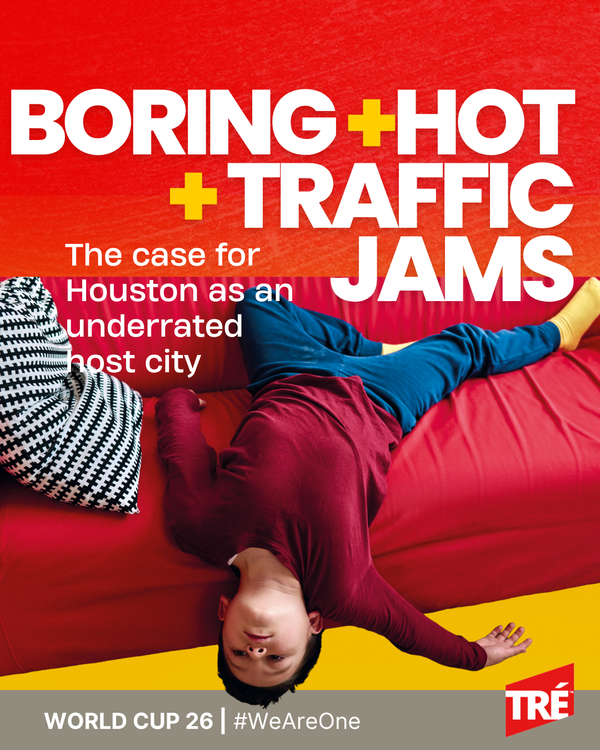
The case for Houston as an underrated host city
There are World Cup cities that arrive with obvious global branding, and then there are cities that need to be experienced to be understood. Houston falls firmly into the second category. For first-time visitors in 2026, that may actually be a strength rather than a weakness.
It is easy to underestimate Houston if your image of it is limited to highways, heat, and sprawl. But that cliché misses what matters most to a tournament traveler. A good World Cup city needs space for spectacle, enough cultural depth to fill the days between matches, and the kind of food and nightlife that turn a short trip into a real memory. Houston checks all of those boxes.
Big event cities should offer more than one attraction
The problem with some host destinations is that they are exciting only at the stadium. Once the match ends, visitors are left with little to do besides return to the hotel and wait for the next fixture. Houston has the opposite problem: there may be too many options. For first-timers, that is a good issue to have.
Whether it is fan zones, neighborhood bars, museums, parks, or restaurant districts, the city gives visitors multiple ways to experience the tournament atmosphere. That matters because not everyone travels to the World Cup the same way. Some fans want nonstop football. Others want a broader city break built around one or two games. Houston can accommodate both.
Its diversity is not a side note
One of the strongest arguments in Houston’s favor is its everyday diversity. During a global event, that becomes an asset in plain sight. Fans from around the world are not entering a city that suddenly becomes international for a month. They are entering one that already speaks that language through its communities and food.
For first-time visitors, Houston’s biggest surprise may be how naturally it fits the spirit of the World Cup.
That is why dining here matters so much. Meals are not just meals; they are often the fastest path into understanding the city. A newcomer can learn more about Houston from a few well-chosen restaurant stops than from any generic tourist pitch.
What visitors should do
- Lean into match-day public energy, including watch parties and supporter-heavy bars.
- Make time for cultural stops, especially if your match schedule leaves open afternoons.
- Prioritize neighborhoods over postcard sights, because Houston’s character is often felt locally.
- Eat ambitiously, because the food scene is one of the city’s great advantages.
A city that may outperform expectations
The best World Cup trips often happen in places that surprise people. Houston has that potential. It can host the scale and noise that the tournament demands, but it also offers the smaller, richer details that first-time visitors remember afterward: a packed restaurant after a match, a spontaneous celebration in a bar, a museum stop that breaks up the intensity of the day, a conversation with supporters from three countries at once.
So yes, Houston deserves more respect. Not because it is the flashiest host city on paper, but because it may be one of the most complete. For first-time World Cup visitors, that can make all the difference.