Who was Crispus Attucks?
Crispus Attucks was a sailor and dockworker in 18th‑century Boston, living and working in the heart of the colonial economy—ports, ships, warehouses, and waterfront streets. He was not a politician, landowner, or famed orator. He was a working-class man of African and Native ancestry, moving through a world that depended on his labor but denied him full rights.
His racial identity is not a footnote; it is central to the meaning of his story. Attucks stood at the intersection of Black and Indigenous experience in a society that debated whether people like him counted as fully human under the law.
What happened on March 5, 1770?
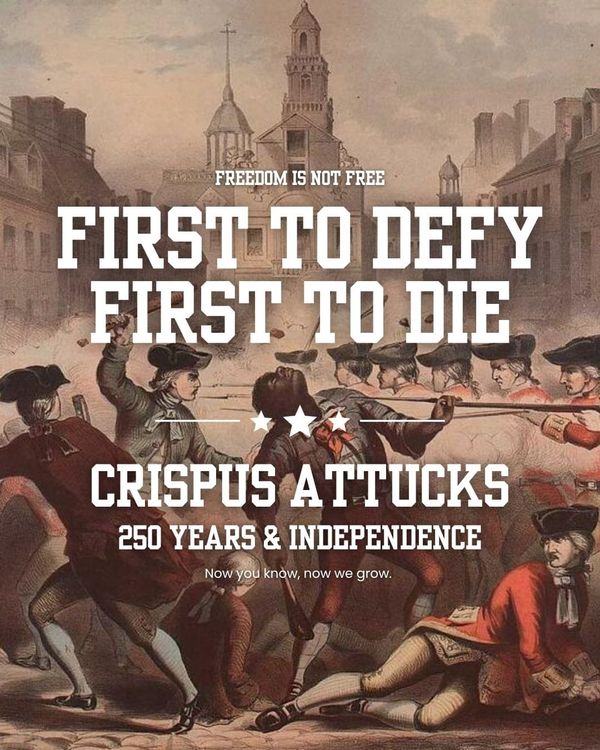
On the night of March 5, 1770, tensions in Boston boiled over on King Street. Residents were angry about British troops posted in their city, taxes imposed from afar, and the feeling of being controlled by an empire that did not answer to them. A crowd formed around a small group of soldiers, and the confrontation turned volatile.
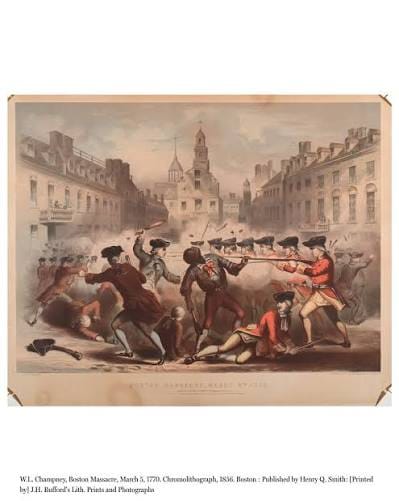
Crispus Attucks did not remain at a safe distance. He moved into the front of the standoff—hands on, in the fight—joining other working men in directly challenging armed authority. He stood so close that voices, clubs, and weapons shared the same narrow space. He chose the place where danger was greatest.
Why is he called “first to defy, first to die”?
Witness reconstructions place Attucks at the very front of the crowd, wielding a piece of wood and striking at least one soldier as the clash intensified. He was not a passive presence. He was actively resisting what he saw as unjust power, fully aware that he was face-to-face with men carrying loaded guns.
Because he was in that front line, he was among the first targets when soldiers fired. The shots were not warning blasts; they were deadly. Attucks was hit in the chest and became the first person to die in what would be remembered as the Boston Massacre. In that moment, he was the first to defy armed rule and the first to die in the unfolding fight for American independence.
How does his race change the story of independence?
Attucks’s African and Native heritage exposes a contradiction at the nation’s origin: he gave his life for a freedom that did not yet include him. He stood up for a community’s right to dignity and self-rule in a political order that treated people of his ancestry as less than fully human.
His story widens the frame of American courage. It shows that:
• People of color were part of the struggle from the very beginning, not added later.
• Working-class men, not just elites and landowners, made decisive choices that pushed history forward.
• The earliest acts of “patriotism” were lived by those who had no guarantee that the new nation would protect them.
Attucks fought for an idea that did not yet recognize him. That is not just a historical detail; it is a moral challenge.
What does his legacy mean at 250 years of America?
As the United States approaches 250 years, Crispus Attucks forces us to ask who independence has truly served—and who insisted on its promises anyway. He represents a kind of belief that comes before recognition: acting on dignity and self-determination before the country is ready to honor those rights equally.
For modern patriotism, that matters. Including Attucks in our understanding of the Fourth of July does not cancel fireworks, gatherings, or celebration. It deepens them. It invites us to:
• Say his name when we talk about the road to independence.
• Remember that the first life lost for this experiment in freedom belonged to a Black and Native working man at the front of the fight.
• See July 4th not only as a day of pride, but as a call to finish the unfinished work of a nation that began by excluding many of its bravest defenders.
When we stand under the sky on Independence Day—especially at 250 years—we can honor Crispus Attucks as part of our pride. His story reminds us that independence started with people willing to risk everything, even when the law refused to fully count them as human.
FAQ: Crispus Attucks and Independence
Q: Was Crispus Attucks the first person to die in America’s fight for independence?
A: yes, Attucks was the first person killed in the Boston Massacre, an event widely recognized as a turning point on the road to the American Revolution. His death is often described as the first martyrdom in the struggle for independence.
Q: Why is Crispus Attucks’s race important to his story?
A: Attucks was of African and Native descent, living in a society that denied full rights and humanity to people of his ancestry. His sacrifice shows that those the colonies tried to marginalize were still central to the fight for freedom.
Q: How was Attucks involved in the Boston Massacre?
A: He took the front position in a confrontation with British soldiers on King Street, physically and directly challenging armed authority. Because he stood in that frontline space, he was struck and killed when the soldiers fired.
Q: How does Attucks change the way we see the Fourth of July?
A: His story broadens Independence Day beyond founders and documents. It reminds us that working-class Black and Indigenous people helped ignite the movement, even when the nation did not yet include them in its definition of “the people.”
Q: What does Attucks’s story ask of us as America turns 250?
A: It asks us to celebrate with truth—to honor not only the ideals of freedom, but also the lives of those who fought for those ideals before the country saw them as fully human. Remembering Attucks is one way to commit to an independence that becomes more complete over time.