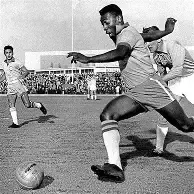
Why One Pelé Exhibition Match Meant More Than a Box Score
Sports fans are trained to measure importance by trophies, standings, and statistics. That is understandable, but it is also limiting. Some games matter because they reveal a culture in motion. Pelé’s 1975 match at the Houston Astrodome was one of those games.
More than 30,000 Texans came to see him. Many had never seen soccer before. Pause on that for a moment. In a state associated with Friday night lights, massive football stadiums, and traditional sports hierarchies, tens of thousands chose to spend an evening with a global game they barely knew. If that is not culturally significant, what is?
It would be tempting to dismiss the event as celebrity tourism. Pelé was, after all, a phenomenon. But that explanation is too narrow. Celebrity can open the door, yet it cannot by itself generate lasting meaning. What made the Astrodome moment resonate was the encounter between a world-famous player and a city ready, perhaps without fully realizing it, to imagine itself differently.
Houston has long been underestimated by people who prefer simpler stories about Texas. They picture a monoculture. Houston has never been that. It is a city of ports, energy, immigration, languages, and layered identities. Soccer belongs naturally in such a place because soccer is what global cities speak fluently. Pelé did not invent Houston’s openness. He gave it a memorable public scene.
The comparison to the Astros is especially telling. If Pelé’s draw rivaled one of the city’s established sports institutions, then the old idea that soccer could only survive on the fringes starts to crumble. The audience may have arrived out of curiosity, but curiosity is not trivial. Curiosity is how cultures expand. It is how yesterday’s outsider ritual becomes tomorrow’s routine tradition.
That matters even more when considering a World Cup 51 years later. Mega-events are often narrated as if they descend from the sky, detached from the local history beneath them. In reality, they rest on accumulated memories, earlier experiments, and first conversions. A city cannot host global soccer meaningfully unless it has spent decades learning how to see itself as part of that world.
Sometimes the most important sports event is the one that teaches a community what it might become.
The lesson of Pelé in Houston is not that one exhibition changed everything overnight. It is that public imagination can shift in a single evening. A packed Dome made soccer visible, respectable, and emotionally legible to people who might otherwise have ignored it. That kind of shift is hard to quantify, but easy to recognize in hindsight.
So yes, remember the attendance. Remember the novelty. Remember the legend on the field. But most of all, remember what the match suggested: that beneath the surface of familiar American sports culture, another future was already waiting. In 1975, Pelé gave Houston a glimpse of it.