Who Was Al Edwards, and Why Is He Called the ‘Father of Juneteenth’?
Are You Aware the ‘Father of Juneteenth’ Sat in the Texas Legislature from Houston?

Who Was Al Edwards, and Why Is He Called the ‘Father of Juneteenth’?

The answer starts in Houston and reaches all the way to the global stage. Al Edwards’ 1979 legislation made Texas the first state to officially recognize Juneteenth, helping shape how freedom is publicly celebrated today.


Share this post

A Quick Guide to an Important Legacy

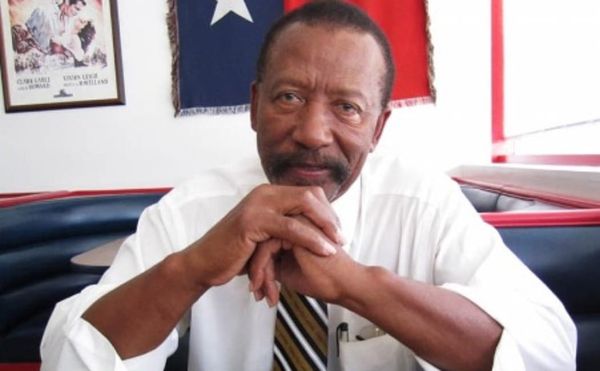
Who was Al Edwards? He was a State Representative from Houston who served in the Texas Legislature and played a defining role in the public recognition of Juneteenth.

Why is he called the “Father of Juneteenth”? Because in 1979, Edwards authored the bill that made Texas the first state to officially recognize Juneteenth as a state holiday. That achievement gave the observance legal standing and a lasting place in Texas civic life.

What Was So Significant About the 1979 Bill?

The bill mattered because it transformed a long-observed historical commemoration into an officially acknowledged public holiday. Juneteenth had already been deeply meaningful in Black communities, especially in Texas. But state recognition amplified its visibility and importance.

In practical terms, official recognition signaled that Juneteenth was not just a community tradition. It was part of the state’s story. That distinction helped move the observance into the broader public consciousness.

Al Edwards’ legislative victory showed that recognizing history in law can help preserve it in culture.

Why Does This Story Matter Now?

Because the impact of Edwards’ work extends beyond its original moment. His bill did not simply create a holiday. It helped establish a framework for public celebration rooted in justice, remembrance, and freedom. Those same values continue to shape how Juneteenth is discussed today.

And the influence of those values is not limited to Texas. The source material connects Edwards’ legacy to FIFA’s “Football Unites the World” messaging, which emphasizes unity, shared humanity, and celebration across borders. While the contexts are different, the overlap is clear: both reflect the idea that public gathering and collective recognition can carry deep social meaning.

How Can a State Lawmaker Influence a Global Conversation?

By acting at a key cultural moment. Edwards used state legislation to formalize a historical truth that communities had preserved for generations. Once recognized by the state, Juneteenth gained more visibility, legitimacy, and reach. Over time, its themes became part of a wider conversation about justice and celebration that now appears in many public arenas, including global sport.

  • Al Edwards served in the Texas Legislature from Houston.
  • He authored the 1979 Juneteenth bill.
  • Texas became the first state to officially recognize Juneteenth.
  • He became known as the “Father of Juneteenth.”

What Is the Lasting Takeaway?

The biggest lesson is that historical memory often needs both community guardians and institutional champions. Juneteenth survived because people kept its meaning alive. But Al Edwards ensured it also had official recognition. That combination is powerful.

So when people ask who helped bring Juneteenth into broader public life, the answer is clear: a Houston lawmaker whose statehouse work continues to echo in a worldwide language of unity, justice, and celebration.



Share this post
Comments

Be the first to know

Join our community and get notified about upcoming stories

Subscribing...
You've been subscribed!
Something went wrong
"This Is Your Library": The Obamas Surprise Students at the Obama Center
President and Mrs. Obama read "Where the Wild Things Are" by Maurice Sendak to children in the new branch of the Chicago Public Library at The Obama Presidential Center in Chicago, IL, on June 19, 2026. Credit: The Obama Foundation

"This Is Your Library": The Obamas Surprise Students at the Obama Center

President Barack Obama and Michelle Obama surprised 25 students from nearby Hyde Park school William H. Ray Elementary at the Obama Presidential Center's Chicago Public Library branch at 10:15 a.m. The Obamas came out to read Maurice Sendak's children's classic "Where the Wild Things Are" and spent about 24 minutes reading as well as taking pictures with the students and teachers afterwards. "Are you telling stories up in here?" President Obama said to the kids after walking into the main read


Tré Exclusives

Tré Exclusives

A Surprise Welcome: The Obamas Greet First Visitors to Their Presidential Center
All Together by Jules Julien in The Obama Presidential Center Museum in Chicago, IL, on March 1,2026 Credit: The Obama Foundation

A Surprise Welcome: The Obamas Greet First Visitors to Their Presidential Center

In a surprise appearance, the Obamas greeted the first 100 visitors to the Obama Presidential Center that first opened to the public on Juneteenth on Chicago's South Side. In awe, guests shook hands with former President Barack Obama and Michelle Obama against the backdrop of a colorful, 38-foot-tall painting depicting a map of Chicago stretching to the ceiling – inspired by Carl Sandburg's 1914 poem about the city: "stormy, husky, brawling, City of the Big Shoulders."   The room is framed by


Tré Exclusives

Tré Exclusives

The Power Behind The Curtain: Paul Tetreault
Image by Mariya Dempsey/Canva

The Power Behind The Curtain: Paul Tetreault

In the midst of change, social and political disarray, and division, art is something that has the power to bring people of all walks of life together.  For some, communal artistry can lie in painting or animation; for me, the heart of it lives in the theatre.  When I was around 6 years old, I remember going to Ford’s Theatre in Washington, D.C. for the first time to see its yearly production of A Christmas Carol. As a young girl, always inspired by the theatre, I found joy in watching a produ


Mariya Dempsey

Mariya Dempsey