
The city should think bigger than the game
Houston will host seven FIFA World Cup 2026 matches at NRG Stadium, and that is worth celebrating on its own. But if the city limits its ambition to stadium operations, hotel occupancy, and fan zones, it will undersell what makes Houston unique.
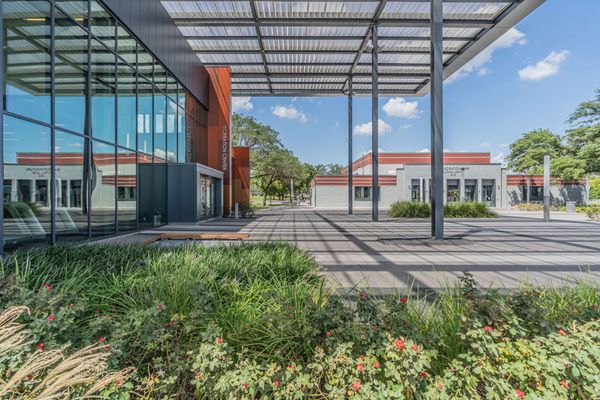
Just miles away are Emancipation Park and other historic Juneteenth sites that many visitors have never heard of. That simple fact should reshape how Houston talks about the tournament. This is not just a host city story. It is a chance to connect one of the world’s biggest sporting events with one of the most meaningful freedom narratives in American history.
What would be lost by doing nothing?
If Houston takes a passive approach, many visitors will experience a generic mega-event circuit: airport, hotel, stadium, nightlife, repeat. That may be good for the visitor economy, but it is a thin version of the city.
Houston has something far more powerful to offer. Juneteenth is not an abstract theme here. It is rooted in place, memory, and community. The presence of nearby landmarks means visitors can encounter that history directly rather than through a brochure or slogan.
Why this matters now
World Cups create intense, short-lived attention. They are cultural stages as much as athletic ones. Every host city tries to stand out, but few can offer a pairing this resonant: global football at NRG Stadium and local freedom history within reach.
That is why Houstonians should not treat the connection as incidental. It should be promoted deliberately. The city should encourage tourists to build freedom tours into their match-day plans, with Emancipation Park as a key stop.
- For visitors: a more meaningful understanding of Houston.
- For local history: greater visibility for Juneteenth landmarks.
- For the city: a distinct identity among World Cup hosts.
- For communities: recognition that the global spotlight can include local legacy.
This is about narrative control
Cities are often reduced by major events to postcard imagery and transit maps. Houston has a rare chance to resist that flattening. By centering Juneteenth landmarks in its visitor storytelling, it can present itself not just as capable and energetic, but historically grounded.
The smartest World Cup strategy for Houston may also be the most honest one: tell visitors that some of the city’s most important sites are not inside the stadium gates.
This does not require overshadowing soccer. It means enriching the experience around it. Fans are already coming. The question is what else they will be invited to see.
A once-in-a-generation test
Houston may not get another moment like this for decades. Seven matches mean repeated chances to make the connection clear, memorable, and accessible. If the city succeeds, people will leave talking not only about the atmosphere at NRG Stadium, but also about the freedom history they discovered nearby.
That would be a worthy legacy for 2026: a tournament that entertained the world while introducing it to a deeper Houston story.