
A global event meets a deeply local city
When people talk about the World Cup, the conversation often starts with stadiums, sponsors, and star players. In Houston, however, another story is taking shape—one that is less about spectacle and more about the people who will experience the tournament in real neighborhoods, restaurants, parks, and living rooms. That is where Tré Magazine is making its mark.
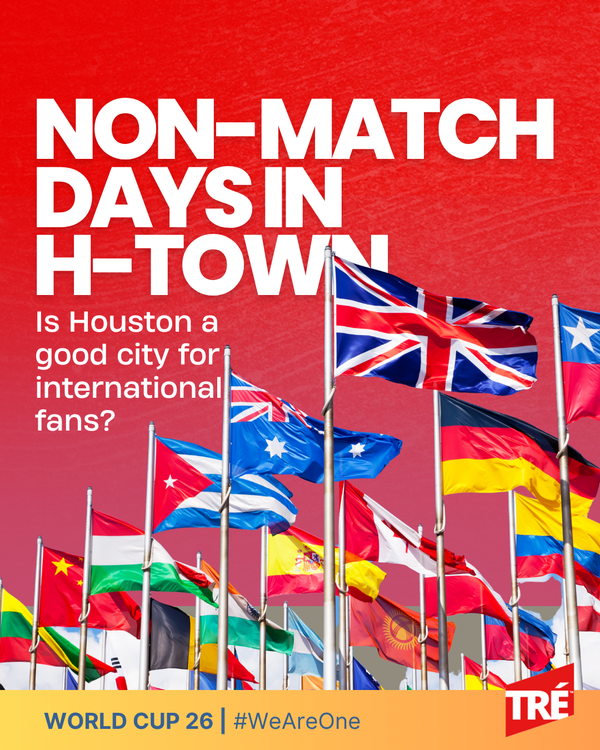
The publication is changing World Cup storytelling in Houston by treating soccer not simply as a sports event, but as a cultural moment. In one of the most diverse cities in the United States, that distinction matters. Houston is already home to communities with deep ties to the game, and Tré Magazine is positioning itself to reflect that reality instead of flattening it into generic tournament coverage.
Beyond the usual sports playbook
Traditional World Cup media often follows a familiar script: match previews, player profiles, logistics, and brand-heavy event coverage. Tré Magazine’s emerging approach points elsewhere. It is interested in how the tournament intersects with Houston’s identity—its immigrant histories, multilingual communities, fashion, food, music, and street-level energy.
That makes the storytelling feel more lived-in. Rather than asking only who will win, the magazine appears to ask a broader set of questions: Who gets seen in this moment? Who gets to define what the World Cup means in Houston? What does international football look like when filtered through local experience?
Why Houston is the right place for this approach
Houston is not a city that can be captured through a single lens. It is sprawling, multicultural, and constantly reshaping itself. For a global tournament like the World Cup, that complexity is not a side note—it is the story. Tré Magazine seems to understand that the event will be felt not just inside venues but across communities that have long carried soccer traditions of their own.
By centering those communities, the magazine helps expand the definition of sports journalism. Its work suggests that coverage can be both civic and cultural. A story about the World Cup in Houston can include local entrepreneurs, artists, fans, family rituals, neighborhood watch parties, and the emotional stakes attached to representation on a world stage.
The World Cup may be global, but in Houston, its meaning will be built block by block, community by community.
A more inclusive media frame
There is also a larger media lesson in what Tré Magazine is doing. Cities hosting mega-events are often covered from the top down, with attention focused on institutions and infrastructure. Tré Magazine’s model shifts the lens downward and outward, toward the people whose cultures already make Houston a football city.
That shift matters because it creates a fuller picture. It acknowledges that the World Cup is not arriving in a vacuum. It is entering a city where the game already belongs to many different communities, each with its own memories, allegiances, and traditions. Good storytelling should reveal that richness, not overwrite it.
What this could mean for World Cup coverage
If Tré Magazine continues on this path, it may help define a new standard for local World Cup journalism—one that does not separate sports from culture, or global events from neighborhood life. Its contribution is not merely aesthetic. It is editorial. It broadens who is visible, what counts as relevant, and how a host city can tell its own story before outsiders do it for them.
In that sense, Tré Magazine is doing more than covering the World Cup in Houston. It is reframing it. And in a city as layered and international as Houston, that may be exactly the kind of storytelling the moment demands.