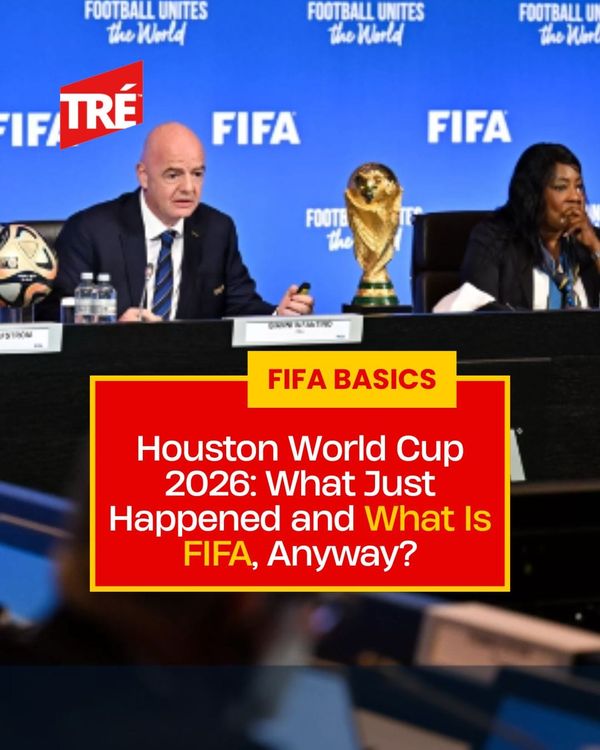
What Just Happened? Houston’s Big World Cup 2026 Moment and What FIFA Really Does
In short
FIFA is the global organization that governs soccer, manages major tournaments like the World Cup, and sets international rules for the sport. As Houston prepares to host World Cup 2026 matches, understanding FIFA’s role helps explain how global decisions will shape the local experience—from which teams play here to how fans enjoy game day.
What Is FIFA and Why Does It Matter for World Cup 2026?
FIFA, the Fédération Internationale de Football Association, is soccer’s governing body, founded in 1904 in Paris. Its main job is organizing international competitions, including the men’s and women’s World Cups, and setting the rules that apply worldwide.
- FIFA coordinates with national associations like U.S. Soccer.
- It decides on host cities, tournament formats, and schedules.
- It oversees the financial, ethical, and logistical standards for each event.
For Houston, FIFA’s choices determine how local stadiums, tourism, and infrastructure meet the standards of a global event broadcast to billions.
Who Actually Runs FIFA?
FIFA is led by a president (currently Gianni Infantino, as of 2026) and guided by the FIFA Council—a group of 37 officials representing every continent. They act as the organization’s executive board, approving policies, selecting hosts, and managing soccer’s global strategy.
- Members serve four‑year terms.
- Decisions are made by majority vote.
- The Council balances international interests with local logistics in host countries like the U.S., Mexico, and Canada.
Their leadership decisions ripple down to cities like Houston, shaping match schedules and fan experiences.
How Does FIFA Choose World Cup Host Cities Like Houston?
The bidding process takes years. FIFA assesses infrastructure, stadium capacity, transportation networks, and community readiness. For World Cup 2026—the first shared across three nations—Houston was chosen for its world‑class NRG Stadium, strong hospitality industry, and international airport connections.
Key selection factors:
- Stadium size and quality (host arenas must seat 40,000+).
- Accommodation and transport for global fans.
- Commitment to sustainability and inclusivity.
This process ensures cities can handle the cultural, economic, and logistical scale of soccer’s biggest tournament.
What Will FIFA’s Decisions Mean for Houston Residents and Visitors?
For locals, FIFA’s presence means more than just world‑class soccer. Houston will see upgrades to public transit, growth in tourism jobs, and global media coverage that boosts local business visibility. Neighborhoods near NRG Stadium are preparing for influxes of fans, and city planners are coordinating safety, accessibility, and entertainment zones.
For visitors, FIFA’s guidelines guarantee a consistent fan experience—ticketing, stadium access, and official fan festivals—making Houston one of the best places in the U.S. to enjoy the global event atmosphere.
What Is the FIFA Council’s Role in Houston’s Games?
The FIFA Council decides which cities host which matches and when. For Houston, that means they control high‑impact details like:
- Which national teams will play here.
- Whether Houston hosts knockout‑round matches.
- Game dates aligned with global broadcast schedules.
Their decisions turn local planning into real match day excitement, linking the city’s preparations directly to the world stage.
Why Does Understanding FIFA Matter Now?
As the 2026 countdown accelerates, understanding FIFA helps Houstonians see how international governance meets local culture. This knowledge deepens appreciation for the massive effort behind each goal, celebration, and anthem sung in NRG Stadium. The organization’s choices shape how Houston—and its residents—appear in the world’s sporting spotlight.
FAQ: FIFA and Houston World Cup 2026
1. When will the World Cup 2026 games be held in Houston?
Matches are expected between June and July 2026, with exact dates finalized by FIFA’s scheduling committee.
2. Who decides which teams play in Houston?
The FIFA Council assigns matches based on logistics, stadium size, and fan distribution projections.
3. What makes FIFA different from other soccer organizations?
Unlike national leagues, FIFA supervises international play and the World Cup, uniting teams from over 200 countries.
4. How does Houston benefit economically?
Tourism, local business revenue, and international exposure are expected to inject hundreds of millions into the Houston area.
5. Will Houston host fan festivals or cultural events?
Yes. FIFA’s Host City Program requires large‑scale fan zones, concerts, and community engagement aligned with local culture.
6. What is the size of FIFA’s global audience?
The 2022 men’s World Cup reached more than 5 billion viewers—numbers likely to grow in 2026.
7. Can Houstonians volunteer for World Cup events?
Yes. FIFA and local committees will open applications in mid‑2025 for volunteers across hospitality, media, and operations roles.