
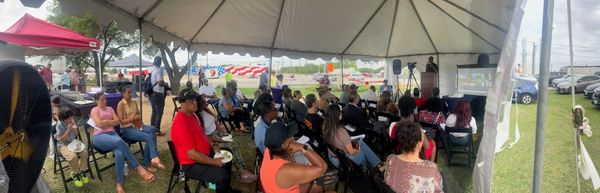
Greater East Houston CRC has completed and celebrated the ribbon-cutting for Phase 1 of its HUD CPF-funded Street and Community Improvements project, marking a visible transformation at the Mesa Corridor and the entrance to Northeast Houston. The first phase adds four murals, a new monument, native landscaping, improved lighting, and extensive cleaning of bridge and concrete surfaces along the corridor.
The project is already drawing attention from residents, visitors, and workers passing through the area. The murals, in particular, have created a new visual gateway for the community, with people stopping to take photos and view the artwork along the railway corridor. Community leaders say the improvements are helping reshape the corridor into a more welcoming and recognizable destination.
The project also includes practical upgrades aimed at improving safety and function. Native plants were selected for landscaping to support drainage and beautify the space, while additional lighting increases visibility along the corridor. Cleaning efforts removed years of grime and buildup from the intersecting bridge and surrounding concrete, giving the area a refreshed appearance.
Another key part of the effort was the use of local contractors and local labor. Organizers say that approach helped support the neighborhood economy while ensuring that the benefits of the investment stayed in the community. The project is being framed not only as a streetscape improvement, but also as a local economic boost.
Officials say the Phase 1 work is already making the corridor more inviting for residents, businesses, and visitors. The visible changes are also expected to strengthen the identity of the Mesa area and support broader redevelopment efforts in Northeast Houston.
Greater East Houston CRC is now looking ahead to Phase 2 of the Mesa Road improvements. Community partners say the next phase will continue the effort to make Greater East Houston a safer, more vibrant place to live, work, and play, while also helping attract new businesses and reinforce the area’s role as a distinctive part of Houston’s landscape.
